Crypto Treasury
What Is a Crypto Treasury Company?
A research-style introduction to companies that hold crypto assets on their balance sheets.
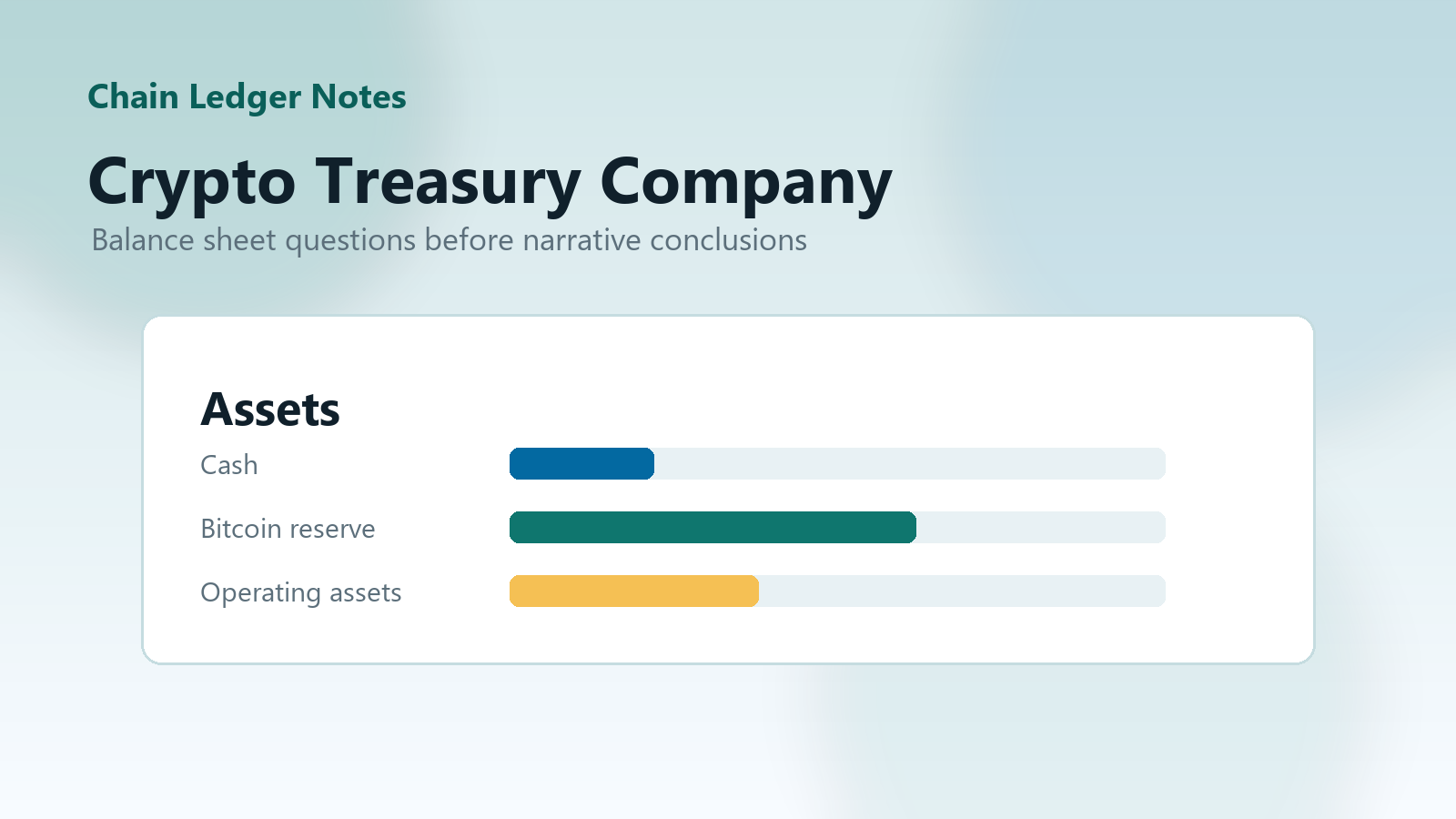
Definition
A crypto treasury company is a company that holds a meaningful amount of crypto assets, often Bitcoin, as part of its corporate treasury strategy. The company may be an operating business, a public company, or a vehicle designed around exposure to a crypto asset.
Why Companies Hold Crypto
Companies may hold crypto assets for several reasons:
- As a long-term reserve asset.
- As part of a brand or product strategy.
- As a way to attract investors seeking crypto exposure.
- As a treasury diversification experiment.
Research Questions
When studying a crypto treasury company, focus on the mechanics:
| Question | Why It Matters |
|---|---|
| How much crypto does the company hold? | Determines the size of balance sheet exposure. |
| How was it financed? | Debt, equity issuance, or operating cash flow create different risks. |
| Who controls custody? | Custody setup affects operational and security risk. |
| What is the core business? | A weak operating business can change the investment picture. |
| Are there leverage or maturity risks? | Debt timing can matter when crypto prices fall. |
Common Misunderstandings
It is easy to think of a treasury company as a simple wrapper around Bitcoin. In reality, the structure can be more complex. Share count, debt, management decisions, premium or discount to asset value, taxes, and market liquidity can all influence outcomes.
Bottom Line
Crypto treasury companies deserve careful, structured analysis. They are not automatically better or worse than direct crypto ownership. They are different vehicles with their own risks.
Risk Disclaimer
Crypto assets and derivatives can be highly volatile. This article is for educational and informational purposes only. It is not financial, investment, tax, or legal advice.
Keep reading
Related Articles
Crypto Treasury
Strategy / MicroStrategy Bitcoin Treasury Introduction
A beginner-friendly overview of why Strategy is often discussed in Bitcoin treasury research.
Exchange Comparisons
OKX vs Binance: Exchange Comparison for Research-Oriented Users
A balanced comparison framework for looking at OKX and Binance without treating either exchange as safe by default.
Risk Management
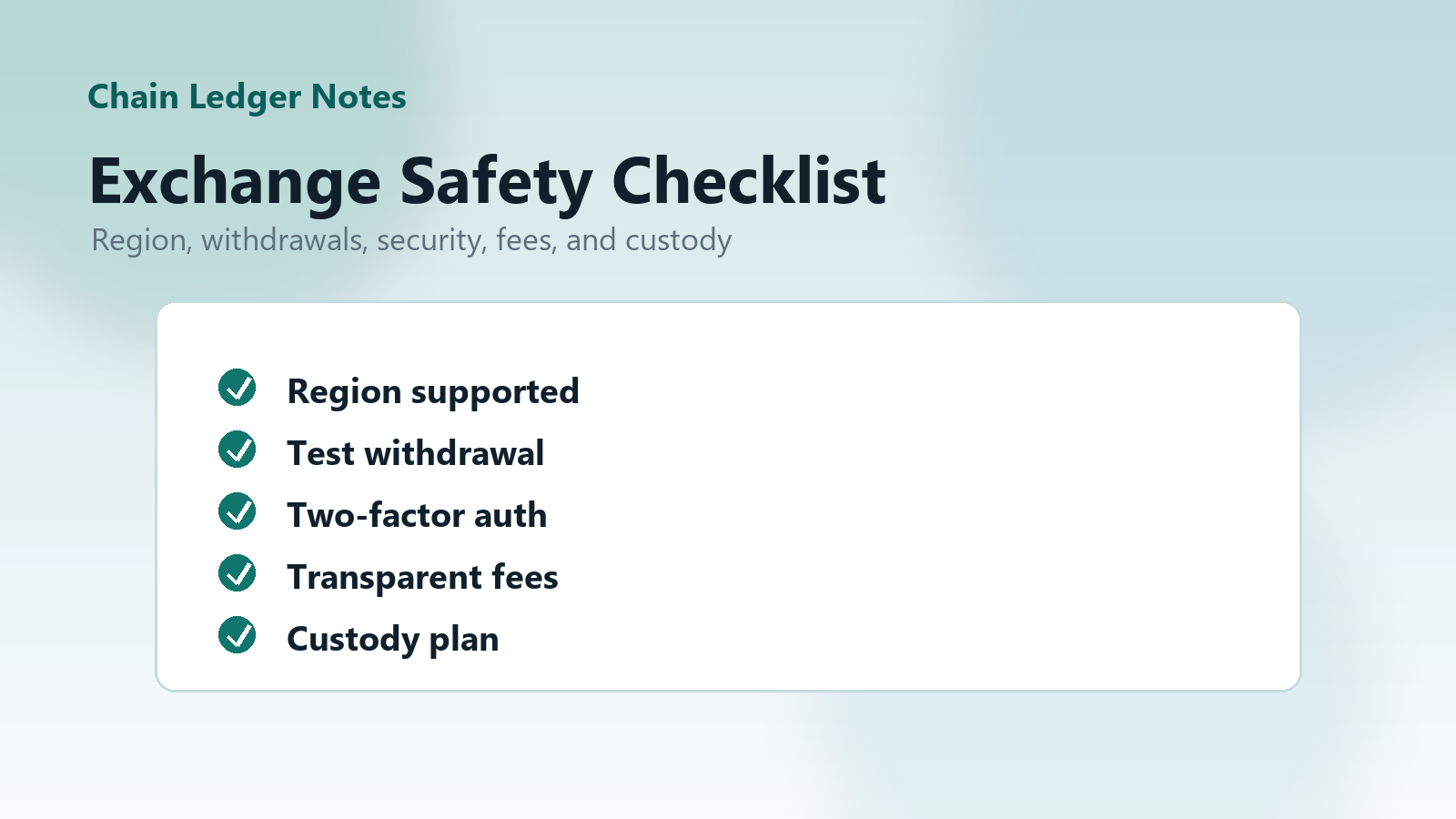
How to Choose a Crypto Exchange Safely
A practical guide for comparing crypto exchanges without relying on marketing claims.